

Buy Furniture and Building Materials from China to Zambia with KUMA Investment

Buying from China can unlock better variety, stronger price options, and access to products that may be hard to find locally. It can also become stressful fast when supplier checks, quality control, shipping, customs paperwork, and delivery planning are not managed well.
That is where a reliable sourcing partner matters. KUMA Investment helps make the process clearer for individuals, contractors, developers, retailers, and project owners who want to buy furniture and building materials from China to Zambia without guessing their way through every step.
The goal is simple: choose the right products, confirm quality before shipping, move goods safely, and receive them in Zambia with fewer surprises.
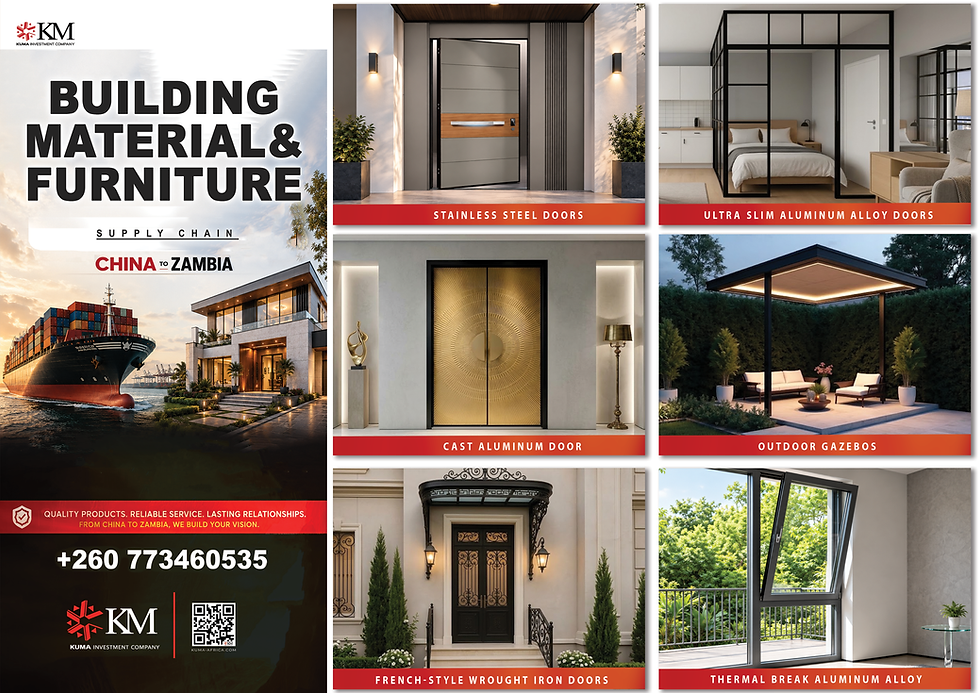

China remains a strong source for furniture and building materials
China is one of the world’s largest manufacturing centers for home, commercial, and construction products. For Zambian buyers, that creates access to a broad range of options in one supply market.
For furniture, buyers can source items such as:
Sofas and lounge sets
Dining tables and chairs
Bedroom sets
Office chairs and workstations for non-office installation projects
Hotel and lodge furniture
Kitchen cabinets
Wardrobes and storage units
Outdoor furniture
School and institutional furniture
For building materials, common categories include:
Tiles and sanitary ware
Doors and windows
Roofing materials
Lighting fixtures
Electrical fittings
Plumbing materials
Ceiling boards
Flooring products
Aluminum profiles
Paint supplies and finishing materials
Steel products and hardware
Kitchen and bathroom fittings
The main advantage is choice. A buyer can compare designs, materials, finishes, and packaging options across many suppliers. That matters for a single home project, but it matters even more for apartments, lodges, schools, offices, shops, and real estate developments where bulk ordering can reduce the average cost per unit.
Price is not the only reason to source from China. Many buyers also want consistency. When one project needs matching tiles, doors, lights, and bathroom fittings across many rooms, local availability can become a challenge. Ordering from one planned supply chain can help keep the design consistent from start to finish.
The biggest risks come from unclear sourcing
Importing is not difficult because one task is hard. It becomes difficult because many small details must line up.
A good supplier must understand the product specification. The goods must match the order. Packing must protect the items during movement. Documents must be correct. Shipping must be planned. Customs clearance must be handled properly. Delivery in Zambia must suit the final site.
When one part is weak, the whole order can suffer.
Common problems include:
Products that look different from catalog photos
Weak materials hidden under attractive finishes
Incorrect sizes, colors, or quantities
Poor packaging for furniture, tiles, glass, or sanitary ware
Missing product labels or documentation
Delays caused by incomplete shipping information
Unexpected charges due to poor planning
Damage caused by bad loading or mixed cargo handling
These risks do not mean buyers should avoid China. They mean buyers need a clear procurement process.
KUMA Investment can support that process by helping buyers move from a general idea, such as “I need house furniture” or “I need materials for a building project,” to a structured order that suppliers can quote and fulfill.
A clear product list saves time and money
Before any supplier search starts, the buyer needs a proper list. This is one of the most important steps in the whole process.
A vague order creates vague results. A clear list helps suppliers quote accurately and helps the sourcing team compare offers fairly.
For furniture, the list should include:
Product name
Quantity
Size or dimensions
Preferred material
Color or finish
Style reference
Use location, such as bedroom, lounge, lodge room, restaurant, or classroom
Packaging needs
Assembly requirements
For building materials, the list should include:
Product type
Quantity or area coverage
Dimensions and thickness where needed
Grade, finish, or technical specification
Color or design
Matching accessories
Installation needs
Expected project phase
Here is a simple way to compare how different order details affect the sourcing process.
Weak request | Better request |
I need tiles | Porcelain floor tiles, matte gray, 600 mm by 600 mm, for 300 square meters |
I need doors | Interior wooden doors, 900 mm width, white finish, with frames and locks |
I need sofas | Three-seat fabric sofas, dark gray, 10 pieces, hotel lounge use |
I need toilets | Close-coupled toilets with soft-close seats, 25 sets, white ceramic |
The better request gives suppliers less room to guess. It also helps KUMA Investment check whether quotes match what the buyer actually needs.

KUMA Investment helps connect sourcing with real project needs
A project does not only need products. It needs the right products at the right stage.
A house may need tiles before furniture. A lodge may need plumbing and electrical fittings before beds and curtains. A retail shop may need shelves, lights, flooring, counters, and display fittings to arrive in a planned order.
KUMA Investment can help buyers think through the order in practical groups. That makes procurement easier to manage.
Furniture packages can be planned by room
Room-by-room planning works well for residential, hospitality, and rental projects. Instead of buying random items, each room gets a complete package.
A bedroom package may include:
Bed frame
Mattress
Bedside tables
Wardrobe
Dressing table
Chair
Curtains or blinds if included in the scope
A living room package may include:
Sofa set
Coffee table
TV stand
Side tables
Rug
Lighting fixtures
For hotels and lodges, this approach helps maintain a consistent guest experience. For apartments, it helps avoid mismatched finishes and repeated reordering.
Building materials should follow the work schedule
Construction materials need careful timing. Some items must arrive before others. If finishing materials arrive too early, they can take up space or get damaged on site. If they arrive too late, workers may stop and the project may lose time.
A useful sequence may look like this:
Structural and rough-in materials
Plumbing and electrical fittings
Doors, windows, and frames
Ceiling and flooring materials
Tiles and sanitary ware
Lighting and final fixtures
Furniture and decorative items
The exact order depends on the project, but the principle stays the same. Procurement should support the construction schedule, not confuse it.
Supplier selection should go beyond the lowest quote
The lowest price can be appealing, especially for large orders. Yet the cheapest quote may not include the same quality, packaging, accessories, or after-sales support as another supplier.
A strong supplier review looks at more than price.
KUMA Investment can help compare factors such as:
Product quality and materials
Supplier experience with export orders
Packaging method
Minimum order quantity
Production capacity
Communication clarity
Ability to supply matching accessories
Warranty terms where available
Readiness to provide photos, samples, or inspection support
Photos and videos can help, but they are not enough for every order. For higher-value furniture, custom cabinets, tiles, sanitary ware, lights, and hardware, inspection before shipment can protect the buyer from costly mistakes.
The best time to find a problem is before the goods leave China.
Once cargo is shipped, fixing a product issue becomes slower, more expensive, and more complicated.
Quality control protects the order before shipping
Quality control does not need to be complicated, but it must be intentional. The buyer and sourcing partner should agree on what must be checked before cargo moves.
For furniture, checks may include:
Correct dimensions
Frame strength
Fabric or leather finish
Stitching quality
Paint or polish finish
Hardware and hinges
Packing protection
Quantity and item labels
For building materials, checks may include:
Correct sizes and thickness
Color consistency
Surface finish
Breakage risk
Batch matching for tiles
Completeness of accessories
Electrical or plumbing compatibility where relevant
Carton strength and pallet packing
Quality control is especially important for fragile items. Tiles, glass, mirrors, ceramic basins, toilets, light fittings, and stone products need proper packing. Furniture corners, legs, handles, and polished surfaces also need protection.
A container can travel through many handling points before reaching Zambia. Good packing is not optional. It is part of the product.

Shipping from China to Zambia needs careful coordination
Shipping goods from China to Zambia usually involves international freight, customs documentation, and inland transport. The exact route and method depend on the type of goods, volume, budget, and urgency.
Small, urgent items may move differently from a full container of furniture or building materials. Heavy construction goods may require different planning from lightweight furnishings. Fragile cargo needs extra care. Oversized items may need special loading arrangements.
Key shipping questions include:
Is the order large enough for a full container?
Should different suppliers’ goods be combined?
Which items are fragile or heavy?
Which products must not be stacked?
Are all export documents ready?
Who handles clearance and inland movement?
Where will the goods be delivered in Zambia?
Is the receiving site ready for unloading?
KUMA Investment can help coordinate these moving parts so the buyer does not deal with suppliers, freight agents, and documentation in a scattered way.
For many buyers, consolidation is useful. That means goods from different suppliers are gathered and shipped together where practical. A project may need tiles from one supplier, lights from another, furniture from another, and sanitary ware from another. Without coordination, each shipment can become separate and costly. With planning, the order can move in a more organized way.
Customs and documentation should be handled early
Documentation is one of the least exciting parts of importing, but it can decide whether goods move smoothly or face delays.
Typical import-related documents may include commercial invoices, packing lists, bills of lading or airway bills, product details, and other records required by the shipping and clearance process. Requirements can vary based on product type and current regulations, so buyers should work with qualified clearing and logistics support for the specific shipment.
The buyer should confirm:
Product descriptions are clear
Quantities match the packing list
Values match the agreed invoice
Supplier details are correct
Shipping marks match the cargo
Regulated goods receive proper attention
Duties, taxes, and fees are planned for
This content is general information, not legal or customs advice. Import rules can change, and each shipment should be checked based on current requirements.
Good documentation starts before shipping. Waiting until goods arrive can create stress, extra storage costs, and delays.
Budgeting should include the full landed cost
A product price from a Chinese supplier is only part of the total cost. Buyers should plan for the full landed cost, which is the total cost to get the goods to the final destination in Zambia.
A realistic budget may include:
Product cost
Local transport in China
Export packing
Inspection or checking costs
Freight charges
Insurance if selected
Customs duties and taxes
Clearance fees
Port or terminal charges where applicable
Inland transport to the final site
Offloading and handling
Storage if the site is not ready
This is where many first-time importers make mistakes. A cheap product can become expensive if it is bulky, fragile, poorly packed, or shipped inefficiently.
For example, a sofa may be light but take a lot of space. Tiles may be compact but heavy. Glass and ceramic products need careful handling. The best option is not always the lowest unit price. It is the option that gives the right balance of product cost, shipping cost, quality, and reliability.

KUMA Investment makes the buying process easier to manage
Buy Furniture and Building Materials from China to Zambia with KUMA Investment when the order needs structure, supplier coordination, and practical follow-through. A good sourcing process reduces guesswork and helps protect the buyer’s money, time, and project schedule.
The process can be kept simple:
Share the product list or project scope
Include photos, quantities, sizes, preferred finishes, and budget expectations where possible.
Review sourcing options
Compare suitable suppliers based on quality, price, order quantity, and export readiness.
Confirm specifications
Make sure every item is clearly described before payment and production.
Check quality before shipment
Use photos, videos, samples, or inspection steps based on the value and risk of the goods.
Plan shipping and documents
Confirm packing, cargo volume, freight method, and paperwork before the goods leave China.
Receive and check the goods in Zambia
Prepare the site, arrange unloading, and inspect items on arrival.
This approach works for one-time home purchases, retail stock, construction projects, real estate developments, hospitality projects, and institutional orders. The scale may change, but the need for clear sourcing and safe delivery stays the same.
A better import starts with a better plan
Buying from China can give Zambian buyers access to a wide range of furniture and building materials, but success depends on planning. Clear specifications, trusted supplier checks, careful packing, proper shipping, and early documentation all matter.
KUMA Investment helps turn a complex import process into a managed procurement journey. Instead of chasing random quotes and hoping everything arrives as expected, buyers can work through each step with more control.
Start with a clear list. Define the quality you need. Plan the full landed cost. Check the goods before they leave China. When those basics are handled well, importing furniture and building materials becomes a practical way to build, furnish, and finish projects across Zambia.


Comments